Monthly Archives: December 2014

What’s your 2015 leadership mantra?

Dream more than others think practical.  Expect more than others think possible.  Care more than others think wise.  ~Howard Schultz

You’ve got mail!  Remyou've got mailember that?  For a number of years now, I’ve developed a Christmas tradition of watching the movie You’ve Got Mail.  I watch it because I like Tom Hanks and Meg Ryan.  Even more so, I watch it because it highlights two business icons that were thriving at the time of the release (1998), AOL and big box bookstores Borders and Barnes & Noble.  We can’t really say that those businesses are “thriving” any longer.

But this time when I watched the movie I realized that I had forgotten that at the very beginning another icon was also highlighted, Starbucks.  While AOL, Barnes & Noble, and Borders have either struggled or gone out of business, Starbucks continues to thrive.  I quickly made a mental note that I could immediately name the person leading Starbucks, Howard Schultz.  But I couldn’t recall AOL’s primary leader back in the day (I’ve refreshed my memory (i.e., Google) and it was Steve Case), and I have no idea who the leaders were for either Borders or Barnes & Noble.

Howard Schultz has authored a number of books; I’m not sure why, but I’ve not ready any of them.  That will change in 2015.  Schultz has a very clear leadership perspective, and I can see why Starbucks thrives when he’s at the helm.  Here are a few Schultz quotes to give you an idea of what I mean.

From Pour Your Heart into It: How Starbucks Built a Company One Cup at a Time

In this ever-changing society, the most powerful and enduring brands are built from the heart.  They are real and sustainable.  Their foundations are stronger because they are built with the strength of human spirit, not an ad campaign.  The companies that are lasting are those that are authentic.

To be an enduring, great company, you have to build a mechanism for preventing or solving problems that will long outlast any one individual leader.

From Onward: How Starbucks Fought for its Life without Losing Its Soul

Grow with discipline.  Balance intuition with rigor.  Innovate around the core.  Don’t embrace the status quo.  Find new ways to see.  Never expect a silver bullet.  Get your hands dirty.  Listen with empathy and over communicate with transparency.  Tell your story, refusing to let others define you.  Use authentic experiences to inspire.  Stick to your values, they are your foundation.  Hold people accountable, but give them the tools to succeed.  Make the tough choices; it’s how you execute that counts.  Be decisive in times of crisis.  Be nimble.  Find truth in trials and lessons in mistakes.  Be responsible for what you see, hear, and do.  Believe.

At least for Starbucks, Schultz’s leadership works.  He certainly gives us a lengthy list of possible leadership mantras for 2015.  What’s yours?

Did I offer PEACE today?

Did I offer PEACE today?  Did I bring a smile to someone’s face?  Did I say words of healing?  Did I let go of my anger and my resentment?  Did I forgive?  Did I love?  These are the real questions.  I must trust that the little bit of love that I sow now will bear many fruits, here in this world and the life to come.  ~Henri Nouwen

As 2014 comes to acandles close, it feels like a year that has lacked PEACE.  From as far as Syria to as close as Ferguson, PEACE has alluded us at many turns.  Regardless of what we may believe individually at this time of year, we can probably all agree that we yearn for PEACE.

Henri Nouwen challenges us to ask, “Did I offer PEACE today”?   He goes on to give us the means for PEACE.  Did we bring a smile to someone’s face?  Did we say words of healing?  Did we let go of our anger and resentment?  Did we forgive?  Did we love?

Imagine an organization whose leaders offer PEACE.  What if each leader intentionally focused on bringing a smile to an employee’s face, every day?  What if the leaders took the time to be empathetic with employees and share words of healing?  What if the leaders were capable of letting go of anger or resentment toward one another?

I’ve seen numerous leadership teams struggle to get in sync, to collectively fire on all cylinders.  Or maybe Henri Nouwen would say they weren’t offering one another PEACE.

History tells us that in the early 1900s the purpose of organizations was to create scale.  By mid-century the purpose transitioned to provide advanced services.  Today, in the 21st century, the purpose of organizations is to become a place to create complete and meaningful experiences.  It’s hard for me to imagine a place that creates complete and meaningful experiences without PEACE.  It’s a new world, where people want PEACE and organizations need PEACE in order to thrive.

Mother Teresa’s wisdom may be words of insight for leaders of organizations in the 21st century.  She said, “If we have no PEACE, it is because we have forgotten that we belong to each other.”

During this week of holiday celebrations, as leaders, let’s offer others PEACE, because we belong to each other.

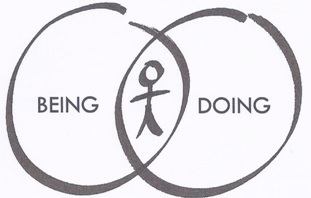
Are leaders a human being or a human doing?

I am a human being, not a human doing.  Don’t equate your self-worth with how well you do things in life.  You aren’t what you do.  If you are what you do, then when you don’t…you aren’t.  ~Dr. Wayne Dyer

I recently spent several daybeing vs doings in the hospital; and that was a stark reminder that I really am a human being and not a human doing.  For several days I couldn’t do anything; I could only be.

I was intrigued and probably a little entertained by the gentleman in the room next door at the hospital who spoke rather loudly.  He had recently retired (I’m thinking an early retirement) from being a stockbroker.  He said that as soon as he retired his cholesterol went down, his blood pressure went down, etc.  I don’t know why he was in the hospital other than his stay was more in terms of weeks not days.  I’m guessing that it may have had something to do with his years of doing that was now taking a toll.

This reminded me of a board member of a client who shared her story with me.  She was the CEO of a large, fast-paced organization.  Her work was her life.  Until one day when she found herself in the hospital with abdominal issues that could have been deadly.  That was her wake-up call to make a change.  She resigned from her position and took time off to just “be” for awhile.  I can still remember her telling me that she didn’t even know where her own vacuum cleaner was because she spent that little time at home; and yes, she had a husband a daughter.

Why do we focus so much on doing?  Maybe it’s because we’ve come to associate our own self-worth with how well we do things; and that may be especially true for leaders.  As Dr. Wayne Dyer said, “I am a human being, not a human doing.  Don’t equate your self-worth with how well you do things in life.  You aren’t what you do.  If you are what you do, then when you don’t…you aren’t.”

The Cooper Clinic has worked with executives since it opened in North Dallas nearly 40 years ago.  Founder Kenneth Cooper contends that there is just as much stress in a CEO’s job as there has always been.  What has changed is technology, which allows CEOs to have constant digital connection with their jobs and makes it difficult to unplug.  “I have patients that answer that thing all night,” he says.  “They need to turn off the phone and avoid taking work home.  We have CEOs who are in horrid shape because they have no work-life balance and are suffering because of it.”

What’s really fascinating is there are numerous studies that have concluded that more time at work [i.e., stress] doesn’t make us any more productive.  Quoting from a recent New York Times article, “Spending more hours at work often leads to less time for sleep and insufficient sleep takes a toll on performance.  In a study of nearly 400 employees, published last year, researchers found that sleeping too little—defined as less than six hours each night—was one of the best predictors of on-the-job-burn-out.  A recent Harvard study estimated that sleep deprivation costs American companies $63.2 billion a year in lost productivity.

So I ask again, why do we put so much value and self-worth on doing?  It’s the time of year to be contemplating New Year’s Resolutions.  Maybe we could all consider making a resolution to focus more on being and a little less on doing in 2015.

Are you a leader who can self-correct?

If we had to point to one quality within a leader that can almost guarantee the prospect of success, it is a belief in the power of self-awareness and adaptability.  We have found that among exceptional leaders, self-knowledge and change are a constant in their lives.  ~Bob Rosen

How does youradaptability behavior affect other people?  How do other people feel when they are around you?  Can you recognize the impact you have on others and adjust your own behavior to create more mutually beneficial relationships?  These are critical questions for effective leadership and I’m beginning to believe they may be at the very heart of effective leadership.

Bob Rosen, author of Grounded: How Leaders Stay Rooted in an Uncertain World, emphasizes the importance of not only self-knowledge but also change and adaptability.  It’s not enough to know what your strengths and weaknesses are to be effective.  Leaders also need to know how their behavior impacts others and then adapt their behavior to increase their leadership effectiveness.  This isn’t just Rosen’s opinion; there’s research to support this belief.  Following are a few excerpts from his book.

Findings like these point to the need for a leadership approach that is dynamic, holistic, and integrated.  They strongly suggest the importance of agility and adaptability and of paying more attention to relationships inside and outside the company.  They also underscore the need to understand your impact on others, consider the bigger picture when solving problems, and become comfortable with unpredictable change.

According to one of the largest executive recruiting firms, 80 percent of executives have blind spots about themselves, and 40 percent have strengths they are unaware of or not using.  Problem areas that could stall or hijack executives’ careers include being too narrow, failing to inspire or build talent, and not relating well to others.

According to research involving 41,000 managers, most people are unaware of how their behavior affects others.  This is especially the case for those people who operate at the “extremes” (people who make quick decisions or, conversely, resist change and diligently follow rules).

Cadbury CEO Todd Stitzer tells of the consequences:  “If you think you can make it up the hill and then realize that people are not following you, you’re going to be a pretty lonely guy when you’re near the top.  So you have to know how people are feeling, and you have to monitor what comes out of your mouth.  You’re always self-correcting.”

Many of us are probably familiar with one of Maya Angelou’s most well-known quotes: “I’ve learned that people will forget what you said, people will forget what you did, but people will never forget how you made them feel.”  As effective leaders, we need to be aware of how our behavior impacts others and then we must adapt, as Todd Stitzer said, we must always be self-correcting.