Monthly Archives: November 2015

How well do you “work together”?

The leadership style was outmoded.  Leadership was “caretaking” rather than proactive, both at the level of business strategy and in how we worked together.  The effects could be felt throughout the company.  ~Julie Straw, Mark Scullard, Susie Kukkonen, Barry Davis (The Work of Leaders)
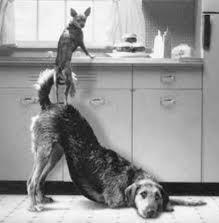
working togetherLeadership was “caretaking.”  I’ve run across several leaders recently whose leadership paradigm is heavily focused on “caretaking” or some use the phrase “providing support.”  I believe the four authors of The Work of Leaders are not suggesting that caretaking or providing support should be excluded from leadership, but that it should not be the sole focus of leadership.

The authors contrast caretaking with being proactive with business strategy and how people work together.  I see more and more leaders being proactive around business strategy but not nearly as many being proactive around how people work together.  I’ve even seen some leaders outright avoid being proactive about how people work together.

In The Advantage, Patrick Lencioni distinguishes between a smart and a healthy organization.  A smart organization has great strategy, marketing, finance, and technology.  A healthy organization has minimal politics, minimal confusion, high morale, high productivity, and low turnover.  Sounds like smart organizations have proactive business strategy and healthy organizations are proactive about how people work together.

Think about your own organization.  In the past year, what level of resources (time, money, personnel, etc.) have been invested in your business strategy (being smart) and what resources have been invested in how people work together (being healthy)?  I’m going to guess that more resources have been invested in being smart; however, at the same time there is concern about being able to sustain success over a long period of time.

As individuals, if we are smart we can probably achieve short term success, but if we’re healthy, we are far more likely to be able to sustain that success well into the future.

Some leaders hold the position that they aren’t in control of their organization’s health, as defined by Lencioni, – it just “is.”  Things like high morale, productivity, low turnover, just happen; leaders have little influence over these key organizational attributes.  To me, that’s like saying I have no control over my health and it doesn’t matter what I choose to eat or how much I exercise.  Sure, part of my health is genetic, out of my control; but the vast majority of my health and quality of life can be influenced by my proactive choices.  I can invest in my health.

Here we are, December 1 already.  As 2016 quickly approaches what investments should your organization (or you personally) make in how people work together?  Legendary business leader Henry Ford said, “Coming together is a beginning.  Keeping together is progress.  Working together is success.”
Leaders and the Power of Gratitude

The deepest craving of human nature is the need to be appreciated (William James).  As we express our gratitude, we must never forget that the highest appreciation is not to utter words but to live by them (John F. Kennedy).

I screwgratefuled up last week.  It’s still bothering me; I hope I don’t make this mistake again.  I was with a client at their manufacturing plant.  When I arrived for three days of leadership training I learned that they would be having a company Thanksgiving meal on Thursday and they asked if I would be able to stay and join them.  I was grateful that I was able to say “yes,” that I would be able to stay and join them in their Thanksgiving tradition.


On Thursday I envisioned finishing out the last session with the management team just before the Thanksgiving meal.  We would walk through the production floor and join all of the employees to share a meal together.  As I gathered up my things one of the managers asked if I wasn’t going to join them.  I said I was but thought we were heading to the break room to eat with the other employees.  I then learned that we would go to the break room to get our food but we would bring it back to the conference room and eat there.  That felt odd (or actually wrong to me) but I decided that they were the client and I was the guest at this point and I should follow their lead.

I regret having done that.  It seemed so contrary to the point of “giving thanks.”  I wish I would have asked if we could join the other employees and eat with the folks from the production floor.  It was an opportunity, as JFK said, to express gratitude and show appreciation.  Instead, we said a few hellos, gathered our food, and headed back to the conference room which is known as “behind the glass.”  In this case, the conference room is behind two walls of glass (to keep out the sound) but you can see out onto the production floor, and maybe more importantly, those out on the floor can see into the conference room.

It’s a short work week, but there is still time to express appreciation.

Appreciation is the deepest craving of human nature and the highest form of appreciation is not to utter words but to live by them.  Don’t follow my example, be grateful and express appreciation to those around you at work and at home through your actions.

Effective leaders recognize the power of gratitude.

How leaders deceive themselves.

The greatest deception men suffer is from their own opinions.  ~Leonardo Da Vinci

deceptionDa Vinci very succinctly described my week.  I facilitated a training and the organization’s CEO decided to join the training at the last minute.  This is always a challenge because when the CEO is in the room (for nearly any organization) the dynamic changes.

This CEO does not hold back if he disagrees with anything I say or present.  Because we are in a room with his direct reports plus other leaders in the organization, I choose to simply acknowledge his comments, most of the time.  But last week I simply couldn’t let some of his comments be the last thing that was said about the topic.

This training was on increasing team performance.  One of the “tools” I suggested was a format for how to ask for individual feedback.  The CEO spoke up and said that the feedback should focus on how the “team” is doing, not on how he is, or is not, effectively contributing to the team.  I agreed that self-evaluation of the team is also very helpful.  I continued to suggest that we all have blind spots, which are things we are doing (both helpful and a hindrance) that we don’t see; hence, they are called blind spots.  The only way for us to be aware of these blind spots is to ask others to help us see them.

I’ll admit I get frustrated with CEOs who think that because they now have the title of CEO that they are somehow exempt from feedback.  And it doesn’t stop with CEOs.  It can be anyone who’s been promoted to a higher level position, and at least for a time, they believe they have “arrived” and are no longer in need of input to make adjustments to their behavior, style, or contributions to a team.  They assume that their own opinions of themselves are an accurate reflection of how they are seen by others.  Da Vinci describes that perspective well: the greatest deception that men suffer!

Here’s an easy way to ask for feedback.  Simply ask: “What’s one thing you see me doing, or failing to do, where I’m getting in my own way?”

I’m going to challenge all of us, myself included, this week to ask at least one person that question: “What’s one thing you see me doing, or failing to do, where I’m getting in my own way?”

For some of us, blind spots may be revealed; and that’s a good thing!  I don’t think any of us want to emulate the emperor with no clothes, so we better start asking for feedback.

Adrian McGinn said, “Our blind spots are only seen by others so seek to be enlightened!”  If you want your team to increase its performance, then the best place to start is with yourself.  Seek to be enlightened!

Leaders laugh!

There is little success where there is little laughter.  ~Andrew Carnegie

laughterOh so true!  Last week I facilitated a two-day training on effective presentations for a global manufacturer who has high expectations for professional presentation skills from all employees.  These employees were lower management so they had minimal experience giving presentations.  And as I had expected, many were in the class to find ways to manage their nerves around public speaking.

It was a small group, just a dozen, so they had plenty of opportunities to practice their presentation skills with no negative repercussions if things didn’t go well.  This was purely a learning and development experience.  After several fun exercises to work out some of their anxiety, the first presentation they had to give to the class was just one minute.

After several presentations, a woman got up to take her turn at the front of the room.  She was especially anxious; she was clearly fearful about that one minute.  She said a few sentences, but then her nerves got the best of her and she started to laugh.  She tried to compose herself, but to no avail continued to laugh.  The class was trying desperately to remain composed and support their colleague.  She continued to laugh, then she gave up and headed to her seat, and the pent-up laughter erupted.  Everyone was laughing, hard, there were even tears streaming down a few faces.  As I moved to the front of the class I told her that it was both unfortunate, and fortunate, that she has an incredibly contagious laugh.

The next day, several members of the class commented that they recounted the incident that night and laughed again.  One person even said that she couldn’t remember the last time she had laughed so hard.

This moment of unabashed laughter caused me to think about laughter in organizations.  Many times, when you ask someone why they married a person, a frequent response is because they make me laugh.  Laughter is clearly something we value in close relationships.  Given that we spend a significant amount of our time at work shouldn’t we want our organizations to be filled with laughter?  And what if it was the leaders in the organization who modeled the way?  Wouldn’t that be a place we’d all want to go to everyday?

Laughter, it may be a tool in every leader’s toolbox that doesn’t get used as often as it could, or should.  Maya Angelou said, “Laugh as much as possible, always laugh.  It’s the sweetest thing one can do for oneself and one’s fellow human beings.”

This week, let yourself go, laugh a little at the office.

What dogs can teach us about leadership.

Many of the qualities that come so effortlessly to dogs—loyalty, devotion, selflessness, unflagging optimism, unqualified love—can be elusive to humans.  ~John Grogan

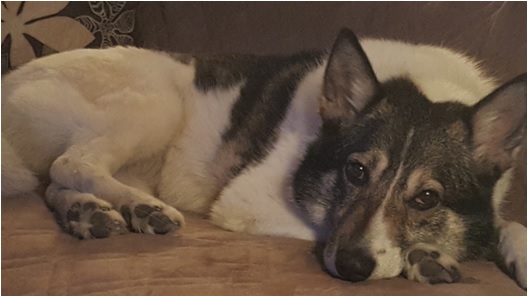
lilyI recently listened to an interview with Jono Fisher about mindful leadership.  His example of being truly mindful was dogs.  He said that dogs are very present and connected; two attributes of being mindful.  I can attest, firsthand, that dogs truly are very present and connected!  Today’s photo is my husky mix, Lily.

Fisher defined mindful leaders as those who are self-aware, authentic, and compassionate.  Others provide a very similar definition.  The website mindfulleader.org says “It’s about creating the space in your life to cultivate self-awareness and compassion, and leading with authenticity in a way that inspires others.”  The Institute for Mindful Leadership states “A mindful leader embodies leadership presence by cultivating focus, clarity, creativity, and compassion in the service of others.”

Early in 2015, an article in HBR by Congleton, Holzel, and Lazar, started with, “The business world is a buzz with mindfulness.  Recent research provides strong evidence that practicing non-judgmental, present-moment awareness (a.k.a. mindfulness) changes the brain, and it does so in ways that anyone working in today’s complex business environment, and certainly every leader, should know about.”

Part of what makes today’s business environment complex is the pace of change coupled with the many opportunities available to nearly every organization.  The ability to determine the most important opportunities and remain focused is one of the greatest leadership skills needed to maneuver organizations through the intricacies of the 21st century workplace.

Bill George, strong proponent for mindful leadership says, “In order to gain awareness and clarity about the present moment, you must be able to quiet your mind.  Regardless of the daily introspective practice you choose, the pursuit of mindful leadership will help you achieve clarity about what is important to you and a deeper understanding of the world around you.”

Quieting your mind?  It may not be as difficult as you might expect.  Fast Company gives us three simple steps to begin to practice mindfulness.

  1. Get into a good position. Take a deep breath and sigh it out.  Sit comfortably and relax your body as much as you can.
  2. Get in touch with your breathing. Close your eyes and find the place in your body where you feel your breath most prominently.  Start to focus your attention in a gentle way to your breathing—this will be your anchor point.
  3. Detach from your thoughts. Within a few seconds, distractions like thoughts, body sensations, or images will start to bubble up.  Realize that this is normal and gently return to the anchor point.  Continue this for eight minutes.

I can’t claim that my dog, Lily, practices mindfulness.  But I do know that her ability to be present and connected (mindful) is inspiring.  She can teach me a thing or two about mindful leadership.