Monthly Archives: April 2020

We Need Emotional Interactions

It’s easy to forget about socio-emotional [interactions] — and that’s where we really need to be focusing now as we adapt to radically different circumstances. ~ Annie Peshkam and Gianpiero Petriglieri

Photo by Tengyart on Unsplash

There are two types of learning and we need both, especially in a crisis. I failed at doing this effectively last week.

First, the two types of learning. Cognitive learning, which is what we likely think of most often when we think about learning. In this case, we “absorb, process, and use information to complete tasks. Cognitive learning has us focusing on information and skills.” The second way we learn is socio-emotional. “We learn how we—and others—feel and think about the new situation we are in, and how to manage those thoughts and feelings. This type of learning has us focusing on people and requires that we inquire about our own and others’ experiences.” (Annie Peshkam and Gianpiero Petriglieri, HBR, April 10, 2020)

How I Failed

I was on a Zoom call with a client working through something we started BC (before Coronavirus). In my attempt to be considerate of their time, I moved the discussion quickly to focusing on information so we could complete the task. However, in my head I was thinking, “I should have everyone check-in, just to see where they are at.” At the close of the call my instinct went to the same thing, “I should ask everyone to close-out with how they are feeling right now.” But, I didn’t. I let time and the task become a higher priority than managing thoughts and feelings.

At the close of the call I was left with sort of a sinking feeling, like the interaction didn’t help move the project forward in a way that was helpful. By not managing thoughts and feelings the call was not as effective as it could have been. Even though I ended the call on time, I wasn’t considerate of how well I had used their time.

Why My Bungle Matters

Authors Peshkam and Petriglieri describe why my bungle matters. “A focus on socio-emotional learning allows us to move away from the burden of delivering a product to the practice of a shared and holistic learning process. That is the kind of learning that lets us process crises and bring about change. It keeps work human and continues the learning we care most about: transforming our organizations and ourselves.”

This doesn’t mean that we sacrifice all cognitive interaction for socio-emotional interaction. It means that we intentionally manage the balance between the two forms of learning. Putting socio-emotional interaction before, and after, the cognitive interaction can help acknowledge reality and provide the framework and tone for more effective outcomes.

This is one more example of the tension that leaders must manage: cognitive interaction and socio-emotional interaction. Leading with bold grace.
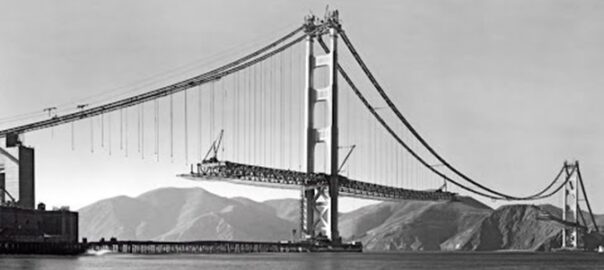

Build the Bridge as We Walk On It

We may know where we want to be, but we will seldom know the actual steps we must take to get there. We must trust in ourselves to learn the way, to build the bridge as we walk on it. ~Robert E. Quinn

I reference Robert Quinn frequently, especially his book Deep Change: Discovering the Leader Within. The title of the first chapter is “Walking Naked into the Land of Uncertainty.” As we’ve all been collectively thrust into uncertainty by Covid-19, I’ve thought about this book frequently.

The Land of Uncertainty

As an example, one of my personal challenges has been quite evident while unpacking in my new home. I wanted to find the right spot for everything, right from the start. To say the least, unpacking was moving along at a very slow pace. I finally had to let myself accept the fact that I just needed to get things put away and I would probably rearrange and revise my unpacking several times until it finally felt right.

I am also realizing the same thing is true in my work, and maybe yours too. I need to just start experimenting with new approaches, new ideas, new formats, and revise as I go – be more agile – not be so concerned about finding the right direction immediately.

Another chapter title from Deep Change is “Build the Bridge as We Walk On It,” something with which we may not all be comfortable. In this chapter, Quinn provides the following example with my paraphrase.

Get Lost With Confidence

“In World War II a military unit was operating under difficult circumstances in the Alps. The commanding officer sent out a squad to scout the area. A day passed, and the squad had not returned. It was feared that they were lost. Three days later, to everyone’s relief, the squad returned. They had become lost and very discouraged. Then one of the men remembered that he had a map in his pack. This discovery brought a surge of hope and renewed energy. The leader took the map and led the squad safely back. The commanding officer summoned the leader to his tent and commended him for his fine work. It was not until later that the commanding officer noticed the map and realized that it was not a map of the Alps but of the Pyrenees.”

 A good outcome can result from a flawed map. The map served as a symbol of hope and energy. It allowed the squad leader to organize his men and get them to believe in a common strategy of action. The fact that the squad was again moving allowed the men to begin to calculate and think about where they were going. The process of acting and calculating allowed them to learn and resolve their problem. Quinn calls this getting lost with confidence.

So, if in the chaos of Covid-19 you have been paralyzed and uncertain about what direction to go, just start acting and calculating, begin to “Build the Bridge as We Walk On It.” Lead with bold grace and get lost with confidence.

Prepare to be forever changed.

The emotionally and spiritually sane response [to Covid-19] is to prepare to be forever changed. ~Aisha S. Ahmad

Photo by Laib Khaled on Unsplash

Two writers have been helpful to me in the last couple of weeks as I think about my own work and how I can best help my clients. What’s become clear to me is that while we may be consumed with the immediate response to the new normal created by Covid-19, we must simultaneously be preparing long-term. Assuming that we can wait it out and then return to business as usual, is likely not a prudent strategy. We need to be bold and respond to the present and plan for a new future.

Andy Crouch, Kurt Keilhacker, and Dave Blanchard of Praxis, suggest we consider three horizons, simultaneously.

Three Horizons

(1) The blizzard – the immediate scramble to prepare for the coming weeks. (2) The long winter – once we’ve positioned ourselves to survive the immediate situation, how do we sustain ourselves for the coming months. (3) A little ice age – this may not end in months; it may stretch out in some form for 18 months to two years. How can we endure the ice age that may be upon us?

The Praxis trio suggests this advice. “…consider how to allocate leadership attention to these three horizons. Our counsel is to immediately direct a substantial percentage of our attention to reinvention for the little ice age, even as we will feel most drawn to operate in blizzard and winter mode. We must ensure our people are safely deployed and cared for in the blizzard, while we build scenarios and take decisive action relating to cash flows, supply chains, customer disruptions, and team capacity. Yet we urge every leader to realize that their organization’s survival in weeks and months, let alone years, depends far more on radical innovation than on tactical cutbacks. This will mean iterating and experimenting very quickly in the coming weeks.”

Prepare to be Forever Changed

The second response I have found helpful comes from Aisha S. Ahmad who wrote the following in The Chronicle of Higher Education.

“Global catastrophes change the world, and this pandemic is very much akin to a major war. Even if we contain the Covid-19 crisis within a few months, the legacy of this pandemic will live with us for years, perhaps decades to come. It will change the way we move, build, learn, and connect. There is simply no way that our lives will resume as if this had never happened. And so, while it may feel good in the moment, it is foolish to dive into a frenzy of activity or obsess about your productivity right now. That is denial and delusion. The emotionally and spiritually sane response is to prepare to be forever changed.”

It’s bold to prepare to be forever changed. It is bold to consider not only the immediate need, but to look at all three horizons simultaneously. In the midst of the Covid-19 crisis, leaders need to be bold.