Category Archives: Leadership

Quick summaries of practices to increase leadership capacity and capabilities.

Leaders are possessed.

The most effective leaders don’t possess specific traits, characteristics or behaviors.  They are possessed by those traits, characteristics or behaviors.  ~Kathryn Scanland

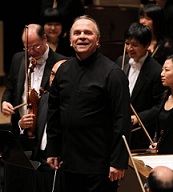
I’m not intending to create a music theme, but we can learn a thing or two about leadership from musicians.  I attended a concert last night; the specific genre would be difficult to pinpoint, they call it folk/gypsy/swing.  The group included four musicians but it was the clear leader of the group who got my attention.  I’ve attended hundreds of concerts and many musicians are superb performers, but now and then you come across someone who appears to be possessed by the music.  Last night was one of those occasions. 

He was truly possessed by the music.  It was as if the music was flowing through every inch of his being.  His energy didn’t waver for even a second throughout the duration of the nearly two-hour set.  There wasn’t a moment that his intensity or passion lingered.  It didn’t seem as if he was performing as much as he was just “being” a vessel for the music to flow through.

So of course I started to think about what a leader would look like if they didn’t just possess specific traits but instead, they were possessed by those traits.  Imagine a leader possessed bypassion, optimism, authenticity, and clarity of purpose.  They don’t possess passion, optimism, authentic and clarity of purpose and then use those traits in their leader performance; they are possessed by those traits.

There are some leaders who fall into this category.  One who immediately comes to mind is Craig Kielburger of Free the Children.  He was caught by passion, optimism, authenticity and clarity of purpose at the young age of 12.  Yes, that’s right; he started a nonprofit at age 12 sixteen years ago.  Free the Children is the largest nonprofit of children serving children in more than 40 countries around the world to free children from slavery.

So why aren’t more of us possessed by leadership as opposed to performing as leaders?  Just like there are many wonderful performers in the music world there are also many wonderful performers in the leadership world so this is not intended to discount those individuals.  But how does someone move from performing to being possessed? 

I can only speculate, but when I think of specific leaders who are “possessed” and not just performing, they have something in common.  They all very intentionally open themselves to being impacted, inspired, and moved by others.  And they do this with a degree of vulnerability that few are willing to risk.

The musician I saw last night could have held back, he could have been concerned that some of his antics may have been viewed as odd or even foolish.  He could have given a “performance.”  But he didn’t, he allowed the music to possess him and instead his passion and authenticity were contagious.  The group was new to most of us in the audience.  But we all stayed and demanded an encore; we couldn’t get enough of what possessed him. 

Imagine a leader, so possessed by passion, optimism, authenticity, and clarity of purpose that we just can’t get enough, and we demand an encore.     
Leaders manage meaning.

When we connect with others through our framing, we shape reality.  What’s more, if we “manage meaning” when others are unable, we emerge as leaders.  ~Gail T. Fairhurst

This past week I experienced one of the many perks of living in downtown Chicago – a night at the Chicago Symphony Orchestra (CSO).  The musicians casually filed in, warmed up their instruments, carefully tuned following the first violin’s lead, and then quietly and reverently waited for the conductor to enter.  He enters and is welcomed with applause.  The conductor could have turned his back to the audience, raised his arms, and began the first piece.  But he didn’t.

Instead, the conductor turned to the audience and described the first piece in great detail.  He told us about the composer, Dvorak, and how the piece was written toward the end of his life.  He went on to describe the visual images throughout the piece, what we would sense, how it would flow, and what was being communicated throughout the music.

All of this reminded me of the very important and artful skill of leadership that we many times rush past – framing.  As Fairhurst states, we shape reality when we take the time to connect through framing.  Framing might be accomplished through a story, a metaphor, visual images, or group exercise.  As an example, it’s taking the time at the beginning of a meeting to set the stage.  On several occasions when I’ve known that those in the meeting have varied opinions and the discussion could create tension, I tell the fable of Three Blind Men and an Elephant.  It acts as a reminder that even though we may see the situation from different perspectives given our individual experiences, that doesn’t mean any one of us is right and all others are wrong. 

Framing can better prepare individuals for an effective meeting and framing can also communicate vision and priorities.  I recall a meeting with a college strategic planning committee that was struggling to articulate their collective vision.  At one point, the president (finally!) stated his vision through framing and it seemed to connect with the committee members.  Then the president, somewhat stunned at their surprise, said, “That’s what I said in my inaugural speech three years ago.”   Somehow, he thought he could frame his entire tenure as president in one speech at his inauguration.  Framing vision and priorities is something that leaders must do constantly, not once a year at an annual meeting, or once in a career.

One of the most effective examples of framing might be Martin Luther King’s I Have a Dream speech.  The vast majority of the speech was framing.  He was “managing meaning” when others were unable.  I’ll admit few of us are orators even close to the likes of Dr. King.  But we can each find our individual art of framing.  My church has a periodic guest speaker who uses visual aids in the form of props to an extreme.  But he uses those props to “manage meaning” and frame his message.  I recently heard a speaker who artfully used fables to frame complex ideas.  I frequently facilitate meetings with leadership teams and I try to come up with a participative exercise that sets the tone and direction for the meeting.

Back to my evening with the CSO.  Because the conductor took the time to “frame” each piece, I have no doubt I that my concert experience was much richer had he not taken the time to shape reality for the audience.  Bravo, CSO, bravo!

Leaders are expert kissers!

KISS for leaders: Keep, Increase, Start and Stop.  ~Nick Obolensky

I don’t know about anyone else, but for me, it always feels like the weekend after Thanksgiving life turns into a sprint to Christmas.  Even though I no longer buy gifts, there are still cards to send, events to attend and projects I desperately want to complete before the end of the year.  Given that backdrop, it was a great reminder this week to read the words of UK-based leadership development consultant, Nick Obolensky

Most of us have heard the acronym for KISS as either “keep it simple stupid,” or “keep it short and simple.”  Nick’s version was created specifically for leaders – Keep, Increase, Start, and Stop.  He says that the “Stops” are hardest for leaders to identify because we all like to think that everything we do is important.  Nick has found that it’s actually the “Stops” that end up achieving the most significant positive results for the executives he counsels.

Nick shares a wonderful example.  A marketing executive was instructed by his CEO to join a team that would be meeting one day per week and that demand made him angry.  The executive worked with his assistant to eliminate some of the work he did and meetings that he typically attended in order to free up one day each week.  Some time later, Nick saw this executive and asked him why this had made him so angry.  His reply:  “Nobody noticed.”

We all like to think that everything we do makes a difference, but the reality is everything doesn’t.  So how do we find those tasks, meetings, projects, etc. that really matter?  I think we experiment and hold ourselves accountable to what we observe.  “Time” fascinates me.  It’s something that we all have the exact same amount of.  It doesn’t matter if you’re male/female, black/white, rich/poor, we all have 24 hours each day – no more, no less.  That means the only way to increase time or start something new is to stop doing something else.  We can’t run to Target and buy more time.  We can only get more time by stopping something. So we have to stop some things and then see what happens.  Did anybody notice?

This week I had an interesting conversation with my financial advisor.  He manages many millions of dollars of assets for hundreds of clients.  He’s always been very successful and is one of the hardest working people I know.  He told me that several years ago he released over $23 million in assets he managed to another financial advisor and he’s preparing to nearly double that number and release another $40+ million.  He’s going to “stop” trying to serve clients who aren’t a good fit for him (many times that “fit” is more about personality than it is dollars).  He’ll then be able to devote more time to serving the clients he enjoys by giving them better service.  He said that last time he did this he expected his income to decrease.  But the opposite happened, his income actually increased.

I’ll be the first to admit that this sounds counterintuitive.  If I “stop” doing some things I’ll actually become moreproductive.  I’ll become more productive because I will have made room for new things and more important things that really do matter. 

The mad rush of the holidays is a great reminder for leaders to work on their KISSing skills.  What should you Keep, Increase, Start, and Stop?

Who’s got the hot potato?

Ownership is a personal commitment beyond dedication and completing a task with excellence.  Ownership means avoiding excuses, accepting absolute responsibility, and owning the results.  It is not for personal gain.  When a person owns the outcome, they are willing to sacrifice themselves for a cause.  It is the relentless pursuit of success. ~Donald Todrin

The hot potato is that “thing” in your organization that no one seems to “own.”  Sure, it’s included in someone’s job description, maybe even several job descriptions.  You might even be able to say that they are completing the task with excellence.  But, at the end of the day, they aren’t accepting absolute responsibility and owning the results.  It’s a hot potato that is tossed to someone else to “own.”

I’ve come across this challenge of ownership in a number of organizations and I’ve been asking myself, “why”?  Is it that sometimes we just don’t see that we need to be owners, or is there something else that’s keeping us from going full-throttle into ownership? 
I stumbled upon a theory in an HBR blog comment.  This blogger said that the Prospect Theory suggests that our willingness to take action depends upon the reference point — whether or not the person “owns” the decision.  So I searched for several definitions of the Prospect Theory.  Here’s what I learned. 
It’s a behavioral economic theory.  Prospect Theory says that people make decisions based on the potential value of losses and gains rather than the final outcome.  We base decisions on perceived gains rather than perceived losses.  Thus, if a person were given two equal choices, one expressed in terms of possible gains and the other in possible losses, people would choose the former.  This is also known as the “loss-aversion theory.”  The HBR blogger says that if someone “owns” a decision they would consider the pain of giving up.  If someone doesn’t “own” it, he considers the pleasure of getting it.
This makes sense to me. You can include any task in someone’s job description, but whether or not they “own” it is a decision they have to make themselves.  This is a behavioral theory; we’re really asking someone to behave as an owner.
Todrin also says:
Creativity, decisiveness, leadership, and sensitivity (if required) are all factors that are involved in this ownership quality. Not only this, but the person must also be able to accept responsibility without question and make decisions in the face of changing circumstances. A person who takes ownership will do whatever it takes, and will be whatever is needed to succeed.
Although it is true that many individuals do their jobs, the downfall is that they still wait to be told what to do.  These workers wait to be reviewed and assessed and take few chances.  However, this is not the definition of ownership.  Perhaps these people can make great employees.  But, they are not the employees who will find great resolutions and forge ahead despite the barriers.
Conclusion: Leaders are owners and owners are leaders.  Anything less isn’t leadership.    

Restrictions will set you free!

We’re paralyzed by infinite possibilities.  Give yourself some intentional restrictions in life and you’ll finally get inspired to act.  Restrictions will set you free.  ~Derek Sivers

We tend to think that a blank canvass will spark creativity.  That if we remove enough barriers employees will suddenly become inspired and innovation will flourish in every corner of our organizations.  Could it be that the exact opposite might be true?

Derek Sivers is a musician and the creator of CDBaby.com, which became the largest online seller of independent music.  Derek provides this example:

I say to you “Write me a piece of music.  Anything at all.  Go.”  “Umm…anything?” you say.  “What kind of mood are you looking for?  What genre?”
There are too many possibilities.  The blank page problem.  How do you begin with infinity?
Now imagine I say, “Write me a piece of music, using only a xylophone, a flute, and a shoe box.  You can only use four notes: B, C, E, F, and only two notes at a time.  It has to be in ¾ time, start quiet, get loud, then get quiet by the end.  Make it sound like a ladybug dancing with an acorn.  Go.”
Ah…your imagination has already begun writing the music as soon as it hears the limitations.  This is easy!
Those of us in developed countries have a blank page.  We can do anything.  Anything we want.   And that’s the problem.  We’re paralyzed by the infinite possibilities.
I’ve seen this thinking within organizations frequently and I’ve done it myself.  Give people lots of freedom and they’ll be creative.  Instead, they become paralyzed.  They return to their offices and keep doing what they’ve been doing; nothing innovative or even new or different materializes.      

Testing has shown that restrictions actually aid creative thought.  An art guild in Colorado took that finding literally and created an entire show based on restrictions.  Each artist was limited to a 1′ x 1′ canvass.  They believed that if they put certain limits on things, it would force artists to see things in different ways and stretch their abilities.

Disney believes that when you have unlimited resources, you can afford to be sloppy with your designs. Restrictions introduce a set of rules that you cannot change so you are forced to be creative in order to come up with a solution.

Think about something you have wanted to accomplish but it’s stalled; it’s not moving forward.  Identify specific restrictions, work within those restrictions, and then watch your creativity and innovation soar.  Your restrictions will set you free!