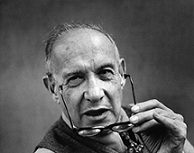
We often avoid the question of whether something is worth doing by going straight to the question “How do we do it?” In fact, when we believe that something is definitely not worth doing, we are particularly eager to start asking How? ~Peter Block
I attended a planning session this past weekend and the facilitator quoted Peter Block, one of my (many) favorite leadership authors.One of Peter’s books is entitled, The Answer to How is Yes.Peter suggests:
Too often when a discussion is dominated by the question of How? we risk overvaluing what is practical and doable and postpone the question of larger purpose. If we are really committed to the pursuit of what matters, we might be well served to hold a moratorium on the question How?
If we could agree that for six months we would not ask How?, something in our lives, our organizations, and our culture might shift for the better. It would force us to engage in conversations about why we do what we do, as individuals and as organizations. It would create the space for longer discussions about purpose, about what is worth doing. It would refocus our attention on deciding what is the right question, rather than what is the right answer.
It would also force us to act as if we already knew how—we just have to figure out what is worth doing. It would give priority to aim over speed. At some point we would either find the right question or grow weary of its pursuit, and we would be pulled into meaningful action, despite our uncertainty and our caution about being wrong. My wish is that we exchange what we know how to do for what means most to us. [The Answer to How is Yes, Peter Block, Berrett-Koehler, 2002.]
Sticking to only what we know how to do can cause us to become, well, stuck. This applies equally to individuals and organizations.
I’ve lived this phenomenon. My first experience in consulting focused on market research—the emphasis area of my MBA. After about 10 years I wanted to change direction in my consulting so I went back to school and got a doctorate in management and organizational leadership. I completed that doctorate eight years ago, but I’ve only recently stopped saying that I do market research. Because market research was what I knew how to do I kept hanging onto it; even though what had really come to matter to me was seeing organizations change and leaders develop. I’ve finally made the transition from “how” to “what really matters,” and I no longer say that I do research when asked, but it took me eight years! I don’t intend to lose that much time from focusing on what really matters, ever again.
In the mid-nineties, AT&T asked Motorola to develop a digital phone. Motorola thought that customers would not accept digital because of the poor voice quality. They had the attitude that they were the market leader, they were doing great, and if they refused, it would not happen. So, AT&T went to Nokia instead, and Nokia didn’t say How? they said Yes! Nokia led the way, ending the era of analog and beginning the new digital era. Nokia took market leadership from Motorola. [Necessary Endings, Dr. Henry Cloud, HarperCollins, 2010.]
I have a hunch that Steve Jobs rarely, if ever, asked the question How? Peter Block says “the phrase, ‘what matters’ is shorthand for our capacity to dream, to reclaim our freedom, to be idealistic, and to give our lives to those things which are vague, hard to measure, and invisible.” I think Steve Jobs spent his life focusing on what matters and his answer to How? was nearly always a resounding Yes! And aren’t we grateful?
Coming clean, or transparency, is about being open.It’s about being real and genuine.The counterfeit of transparency is illusion: pretending, “seeming” rather than “being,” making things appear different than they really are.~Stephen M.R. Covey
Not long ago I had a conversation with someone about trust.He believed that because he had not told a flat-out lie, the level of trust between us should not be affected by his hiding things or withholding and failing to disclose information.I disagreed.His lack of transparency caused me to be suspicious and uncertain what I could, or couldn’t, believe; hence, I wasn’t sure when I could really trust him.
Ironically, a few months prior to this, I had another conversation with this same person.In this instance, I had gone through a rather traumatic experience and he asked me how I got through it.I responded with one word: transparency.From the instant I got the news of this ordeal, I selected a few people to whom I disclosed everything – what was happening, what I was feeling, my struggle to process everything as quickly as it was unfolding, etc.That transparency was a Godsend.Coming clean, being frank, open and candid with people I trusted was a reflection of the quality of my relationship with these people.
Authors Karen Walker and Barbara Pagano describe transparency like this:
Leaders who keep in mind the spirit of authenticity while working hard to create meaningful connections with their followers, demonstrating sincerity of being, and revealing personal information that adds value to the context of work, will be practicing an important part of leadership transparency that builds credibility. Doing so, however, requires a certain level of maturity and self-awareness and a heightened sense of how people might perceive, dissect, and disseminate the information that is revealed. And because authenticity or personal transparency ultimately describes the quality of a relationship, leaders must create opportunities in which to engage with their followers, allowing the followers to know them. [Source:TheLinkage Leader, Transparency: The Clear Path to Leadership Credibility, Karen Walker & Barbara Pagano, 2005-2008.]
Stephen M.R. Covey says that transparency will usually establish trust fast.I would contend that the opposite is also true.A lack of transparency will usually erode trust very quickly.So how do we move toward a higher degree of transparency?
Organizational and leadership gurus, James O’Toole and Warren Bennis say that, “If you want to develop a culture of candor [and transparency], start with your own behavior and then work outward – and keep these recommendations in mind.Tell the truth.Encourage people to speak truth to power.Reward contrarians.Practice having unpleasant conversations.Diversify your sources of information.Admit your mistakes.Build organizational support for transparency.Set information free.”
Leaders who surrender are not “giving in,” they are “giving over.” (~Kathryn Scanland) They recognize that their successes are with and through others. They don’t need to take the glory with them when they leave; they intentionally leave it behind. (~Susan Debnam)
For most people, the idea of “leaders surrender” is the opposite of what they would think or anticipate. If you’re leading aren’t you controlling, commanding, directing, and winning? Not surrendering?!
Well, hopefully your organization is winning, but many times (and I’d argue most of the time), the organization wins because the leaders surrender. The most appropriate definition of surrender in this context is to lay down your arms. What are your arms? Author of Mine’s Bigger Than Yours, Susan Debnam, suggests a list of traits that I believe fall into the category of what leaders need to surrender to be truly effective. Here are just a few:
Invincibility: They ignore cautionary words and take flagrant risks. Sensitivity to criticism: They say they want teamwork but really want yes-men. Lack of empathy: They crave empathy but are not empathic themselves. They can be brutally exploitative. Intense desire to compete: They are relentless and ruthless in their pursuit of victory, often unrestrained by conscience and convinced that threats abound. Tendency towards grandiosity: They over-estimate their own abilities. Addiction to adulation: They have a constant and often petulant need to be told of their greatness. Inability to learn from others: They like making speeches, telling, transmitting and indoctrinating, but are less open to hearing others’ views and suggestions. Distaste for personal development: They don’t want to change and as long as they are successful, they don’t think they have to.
In my conversations with various leaders one of the aspects of leadership that frequently enters the discussion is self-sacrifice. Many people in leadership positions define self-sacrifice as giving up personal time or time with their family. What sacrifice really means in the context of leadership begins with the above list of traits. It’s not about patting yourself on the back because you never see your family or have no personal life; sacrifice is about surrendering your need for self-admiration (being right, getting the credit, never failing, always having an answer, etc.).
Leaders who surrender are not “giving in,” they are “giving over.” They recognize that their successes are with and through others. They don’t need to take the glory with them when they leave; they intentionally leave it behind.
There is one prerequisite for managing the second half of your life: You must begin doing so long before you enter it. ~Peter Drucker
I was drawn to an article in The Best of HBR (Harvard Business Review) which was a reprint from January 2005 called Managing Oneself by Peter Drucker. The section on managing the second half of your life really caught my attention, for several reasons.
With the surge of Baby Boomers now beginning to retire, there are more and more individuals in organizations who are in the second half of their life. It’s not uncommon for me to run into at least one individual on every leadership team I work with who is contemplating leaving because they realize they probably have only “one more job in them.” Or others are considering reinventing themselves one last time by going back to school to pursue a degree or complete a degree they started years earlier.
Another reason this caught my attention is because it’s right where I’m at, personally. As I approach my 50th birthday in a little over a year, I think about one more professional evolution and what that might look like. But I also think about what might follow and I have begun the process of creating a completely different life/vocation. Even the process of creating this different life over the next 10 or so years, I’ve found to bring great joy and anticipation, as opposed to dreading the unknown. I was encouraged to learn that at least according to Peter Drucker, it seems that I’m on the right track. Although I have to confess, I’ve been motivated to do this by the many clients I’ve watched move into a state of anxiety and depression because they have no idea “what’s next” as they approach the latter part of their professional careers.
Peter suggests several ways to manage the second half of your life, and to begin so, now.
He says there are three ways to develop another career. The first is actually to start one. Often this takes nothing more than moving from one kind of organization to another. There are also growing numbers of people who move into different lines of work altogether: the business exec who enters the ministry at 45, for instance; or the midlevel manager who leaves corporate life after 20 years to attend law school and become a small-town attorney.
The second way to prepare for the second half of your life is to develop a parallel career. These people create a parallel job, many times in a nonprofit organization that takes another 10 hours of work a week. They might run the battered women’s shelter, work as a children’s librarian for the local public library, sit on the school board, and so on.
Finally, there are the social entrepreneurs. These leaders love their work, are very successful, and many times start another activity, usually a nonprofit.
The prerequisite for managing the second half of your life: You must begin long before you enter it.
As a side note, two-thirds of Peter Drucker’s 39 books were published after his 65th birthday. Guess I still have a lot of time!
Effective leaders don’t copy or mimic what others are doing and claim it’s the best practice.Effective leaders are deliberately and intentionally creating the best practice.~Kathryn Scanland
The quote this week was inspired out of my own frustration.In my role as a consultant I’m frequently asked what others are doing, what’s the “typical” way that something is done or handled, or what’s the “best practice” for a range of organizational challenges.What frustrates me is many times I feel like what I’m really being asked is not what’s best, but what are others doing that we can copy so we don’t have to spend a lot of time or effort thinking about this.
If we’re copying or mimicking what’s typical or common then how can we call that a “best practice”?
In my first job out of college it didn’t take very long before I was irritating my boss with questions and inquiries about how we could change, improve or enhance what we were doing.I made the very inaccurate assumption that everyone in a leadership position was interested in moving beyond mediocrity or the status quo.My boss and I actually got into a rather intense conversation about mediocrity.He felt that in many cases mediocrity or the status quo was quite acceptable, maybe even preferred.Wow, this was so eye-opening for me that I still remember the conversation in detail even though it took place more than 25 years ago.
I had no idea that so many people in organizations really were content with being common, typical, mediocre or maintaining the status quo.So when someone in a leadership position asks me for the “best practice,” I bristle.I know I’ve flippantly responded with something like, “Why don’t you create the best practice”?
I’m not suggesting that leaders should reinvent the wheel with every process, service, product, etc., etc.I am suggesting that when it’s critical to their core business, leaders should do the very hard (and rewarding) work of creating the best practice.Yes, it’s hard work to be the best, of course it is.But if you’re copying the common or typical practice can you really say you’re a “leader” because you’re clearly not in the “lead.”
If you say you’re the leader in your industry then who’s copying your best practice?If no one’s mimicking your work, then maybe you’re not the one in the lead.